I've always been the same I think. The longer I go without being involved in something slightly scary, the more trepidation I get about returning to it. I used to do a bit of mountaineering and was nervous before any big trip and I'm definitely starting to get butterflies about our own now imminent departure. once I get started, as before, I'm sure I'll relax, enjoy it and realise that 99% of my fears were actually butterflies of excitement. NB. The remaining 1% is the very real fear of parking in unknown harbours, and talking to people on the VHF which fill me with dread - unless nobody's watching, or listening.
--
Officially we're back in the water at the end of March, so we have about 4 weeks now to do any jobs which can only be done while Isabella is on land. My current list is as follows (written really as an aide-memoir for me. Probably very very boring for you):
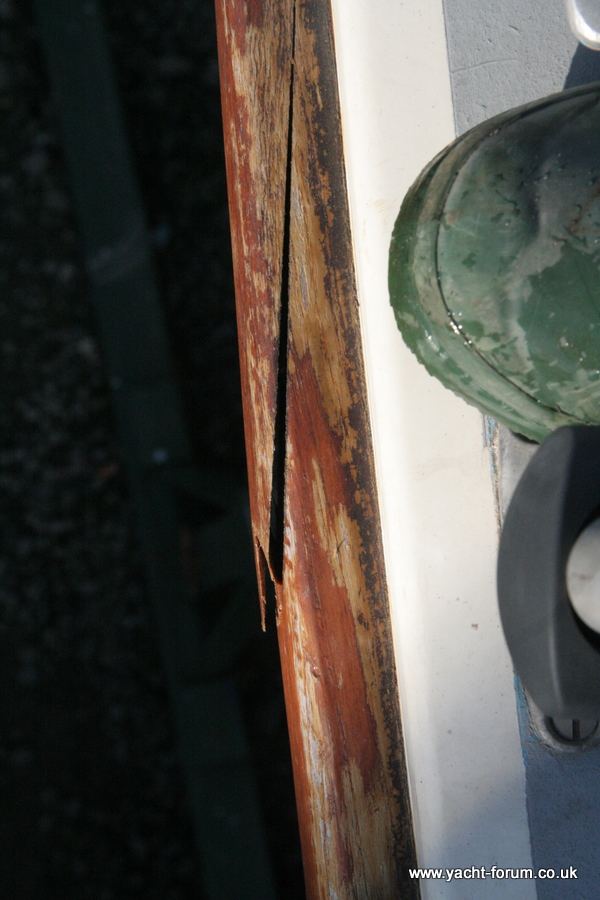
Fix the scarf joint
The scarf joint is a joint in a strip of wood which runs the full perimeter of Isabella. During the extreme cold in December (I think) our port side scarf joint opened up a couple of mm. Going to attempt to countersink a couple of stainless screws to hold it in place temporarily until we've had some warm and dry weather for a while, then do a proper job and glue it down, and cover the screw heads with wooden plugs.
Grind and treat the rust spots on the keel
Rose did this last spring when we were out of the water in Yacht Haven Quay, Plymouth. I thought the zinc paint we applied would stop them returning, but obviously not. It doesn't look very bad though - but still needs doing before the infamous...
Antifoul
A much hated job on the whole. But for me it's so intrinsically linked with the impending adventure of relaunch - coupled with the fact that it makes the boat look like new (well, a bit) - that I get quite excited about it. Perhaps that's just because it will only be the third time we've ever had to do it. And perhaps also because the first and second times, I got other people to do most of it for me... on reflection I think I might be very busy with work for the couple of weeks before relaunch. Hopefully Rose won't read this before then. Shh!!
Wood Treatment
At Exeter Turf Lock last year, Rose went to a hen do and the weather was glorious. So I took it upon myself to strip, treat and varnish all of the exterior woodwork on Isabella. It was a labour of love, took hours and hours and I was very pleased and proud with the results. I'd used Sikkens Novatech and Novatop which were recommended to me as something which would produce a finish not so nice as true "varnish" but a finish which would protect the wood and not need touching for some years. Unsure if it was the cold of December, but unfortunately much of it lifted off the horizontal surfaces making it look less than wonderful and annoyingly making me feel it necessary to do something to sort it out.
Fill The Water & Diesel Tanks
Might as well do this while here. Tap is nearby, and for the moment so is transport so we can visit the garage and fill the jerry cans with diesel. Also make sure we have plenty of gas for barbecue and saloon cooker, paraffin for the lamps and meths for the priming of the pressure lamps.
Stock Up
Food, fuel, toilet roll.
Check The Sea-cocks
We have a number of holes in our hull, some below the waterline. Through these holes are plastic and metal devices which allow a pipe to be connected to them for passing or collecting various fluids to/from the sea. The metal ones are made of various metals (usually some kind of bronze) which can be affected by corrosion and electrolysis. If electrolysis occurs (caused by stray electrical currents on the boat) through them, they can "de-zinkify" and become extremely fragile. Couple this with the fact that a 1" hole in the hull below the waterline will result in a leak which brings in more water per second than can realistically be pumped out in a second and you soon realise that careful sea-cock checking is extremely important. I'm going to scratch the exterior surfaces and check for the metal looking pink - a sure sign of de-zinkification.
Run The Engine
Just want to be sure our winterisation process worked and ensured the engine didn't suffer from frost damage like a number of other boats and engines did locally in December. And that the impeller is OK (it drives cooling water around the engine). Super important to ensure the engine works otherwise we'll be launched into the river Esk and then drift, out of control, into the nearest obstacle.
Drain Fuel Tank Sump
We have a mild steel fuel tank, and water always gets into non-full fuel tanks in winter by condensation. As a result there's likely to be a build up of a little water and rust particles in the bottom of the tank. Fortunately there's a screw in the bottom so we can drain this gunk off. Unfortunately it's really inaccessible and a very messy job.
Bend On The Sails
All of our sails and lazy-jacks (a bag and rope system for controlling the mainsail) are in bags in our aft (back) cabin and need bending on (putting back on the rig). This will involve a climb by one of us to at least half the height of the mast. Officially I think it's not recommended to put the sails on until you're in the water because of the potential for making the boat tip over when on land - but in practice on a still day it should be fine to do it sooner.
General Systems and Rigging Check
All fastenings, lights, and electronic equipment need checking to ensure they're OK. I think they are to be honest. I keep firing things up to show people who visit us anyway, but a final check before launch is obviously a good idea.
Clean
Isabella, inside and out, is showing the signs of being in a muddy carpark in winter for the best part of six months. Spring cleaning is very much required. Weather permitting (some jobs like the woodwork need a couple of dry days) it'd be really nice to leave Whitby looking shiny and new.
Make Launch To Do List
There's a number of important things to do at the point of launch which really are best not forgotten. The excitement of the launch though might well lead me to forget. Three really key ones are: 1. burp the propeller shaft seal (a seal between hull and prop shaft which requires squeezing to allow air out and water in which keeps it lubricated and cool during operation. Forgetting to do this will result in seal damage probably meaning replacement which also means being lifted back out of the water again). 2. Turn on the engine cooling water intake seacock. 3. Re-install the engine fan belt.
Here's a shot of the scarf joint, and horrendous looking woodwork. To give an idea of scale, the green is the toe of my welly.