I don't really think there's been a typical day. At the moment for instance I'm awake as it's blowing near gale force and the only thing keeping us off the mud, which is about 20m behind us right now, is a piece of rope attached to a metal hook which is dug into the mud in front of us. Anchor watch is pretty dull to be honest though so I think I'll go back to bed shortly.
An average day though...
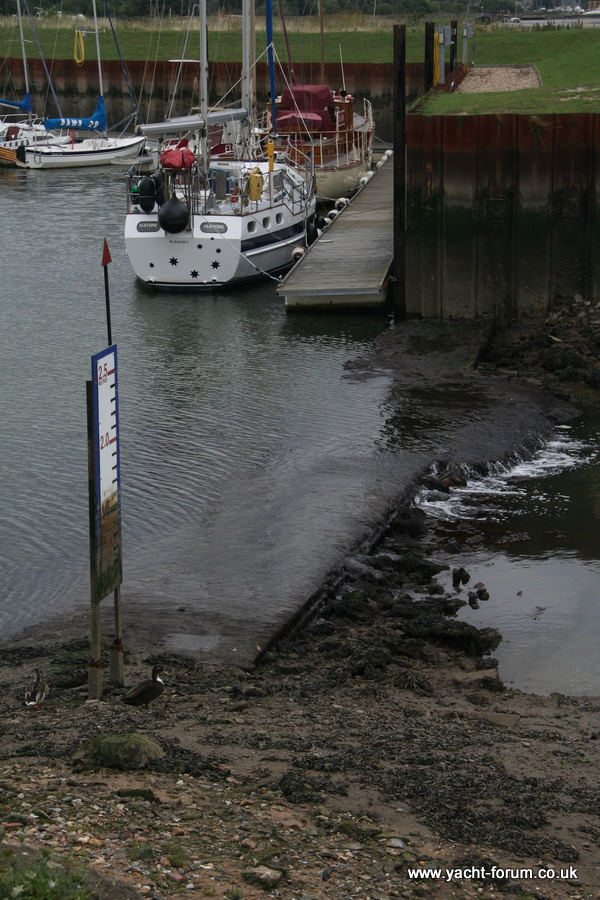
We'll have been working all week and at the same time keeping an eye on the forecast for the weekend. Will also have an eye on the tides to see what sort of time of day offers the most assistance in the direction we want to go, and what sort of height of tide we need to both leave where we are, and enter the next port of call.
Assuming the conditions aren't horrendous we then get the boat ready the night before, scrutinize the forecast, double-check the tides and set the alarm (seems very often we set off pretty early).
Next morning it's up to re-check the weather, have brekky and a cuppa, and weigh anchor to make the passage.
If it's a long one we'll take it in turns to be on watch. Being on watch can amount to looking around once every few mins or on occasion a vigil of attention - the latter necessitating shorter watch periods.
A usual voyage so far has been in the 20 to 40 mile range. Given good winds and tides (which we've had a lot of, partly due to being patient and waiting for them) that will take something in the region of 3.5 to 7 hours... which sounds a lot, but it's nothing at all like a 7 hour car journey! Even when you're on watch it's a bit of a philosophical moment of reflection. Well, for me at least. For Rose I think it's more about racing with the unsuspecting boat which is nearest to us

On arrival at our destination we mostly have me on the helm and Rose on the pilot books. The pilot books give loads of info about things to watch out for, buoy positions, likely changes to the channel (on the east coast we have had to obtain updates as the channels can change overnight in the right (wrong) conditions), historical info, places where it's good to anchor, good pubs, good eateries and photos of how things look on approach.
Then we'll arrive in some anchorage. Either it'll be deserted which makes things easier or it'll be rammed. We zoom in the gps very tight and then go in a circle while closely monitoring the depth (one of our electronic readouts shows depth). Just prior to this we'll have worked out the maximum amount the depth will drop from what it is now, add 1.5 to that (our keel's depth), plus a bit more for luck (depending on how much swell there is and how confident we're feeling), and make sure the entire circle is deeper than that figure. Then we position ourselves in the centre of that circle and drop the anchor. As soon as it touches the bottom we stop letting out chain, then wait till we start to drift. If there's no tide or wind we'll motor astern (backwards). Once we're moving chain (up to 25m of it) is paid out. If depth or conditions require it, we let out some length also of the rope which is spliced to the chain (which always worries me as I did the splice myself).
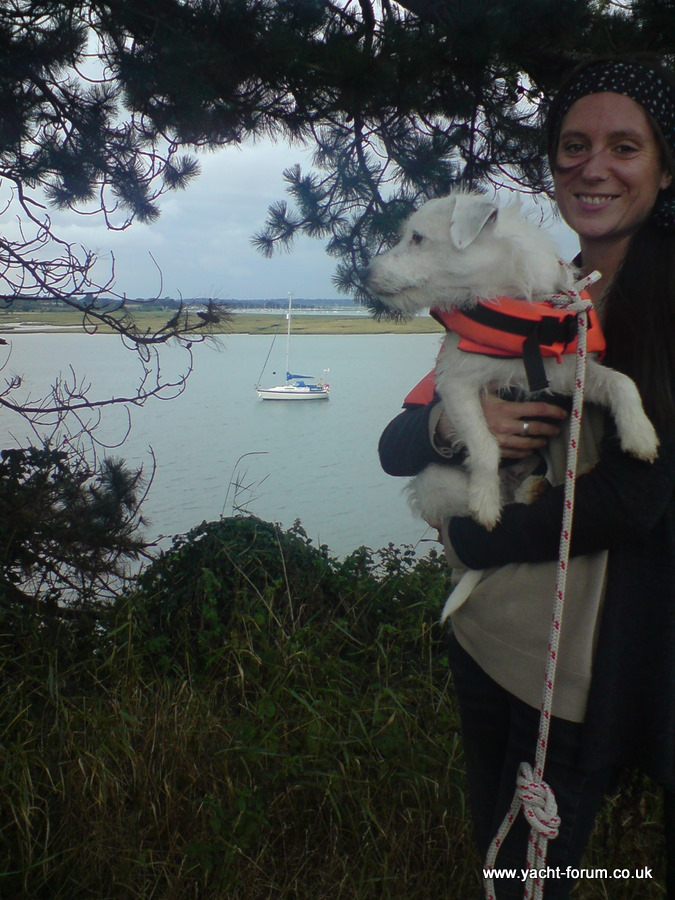
We then watch for dragging and set an anchor drag alarm on the handheld GPS while working out where we can row ashore to, where best to exercise the dog, and where find the nearest eatery.
Later we'll return to the mothership and a warm sleeping bag.
Which is pretty much precisely what happened yesterday.
Then sometimes, like this time, the forecast shows extreme conditions, and we have to think about having one of us (which thus far has been THIS one of us

) on anchor watch. The thinking being that should something fail, we'll have a better idea of where the very expensive anchor might be so we have a greater chance of salvaging it... I guess also so that we'd be able to get the engine started quick-sharp, and motor ourselves out of trouble.
Then it'll be a week of work, and a repetition of the above.